

Recent post

Chrono Trigger writer Masato Kato both directed and wrote the main scenario. Due to his attitude at the time, the plot and tone were considerably darker than Chrono Trigger, though the additional scenarists wrote alternate scenarios with comedic tones. The music was scored by Yasunori Mitsuda, who had worked on Chrono Trigger. Production was completed in three months, and Kato was left unsatisfied with its quality.
As with most Satellaview titles, Radical Dreamers did not receive a lasting commercial release, and was exclusive to Japan. Attempts to bundle the game with the PlayStation port of Chrono Trigger were stopped by Kato due to quality concerns. The ROM for the game was released onto the web, allowing for the production of an English fan translation. While limited, its coverage in news and fan sites have praised its narrative and tone. Kato would later used plot elements from Radical Dreamers in his next game Chrono Cross.
DOWNLOAD: MEGA (2 MB)
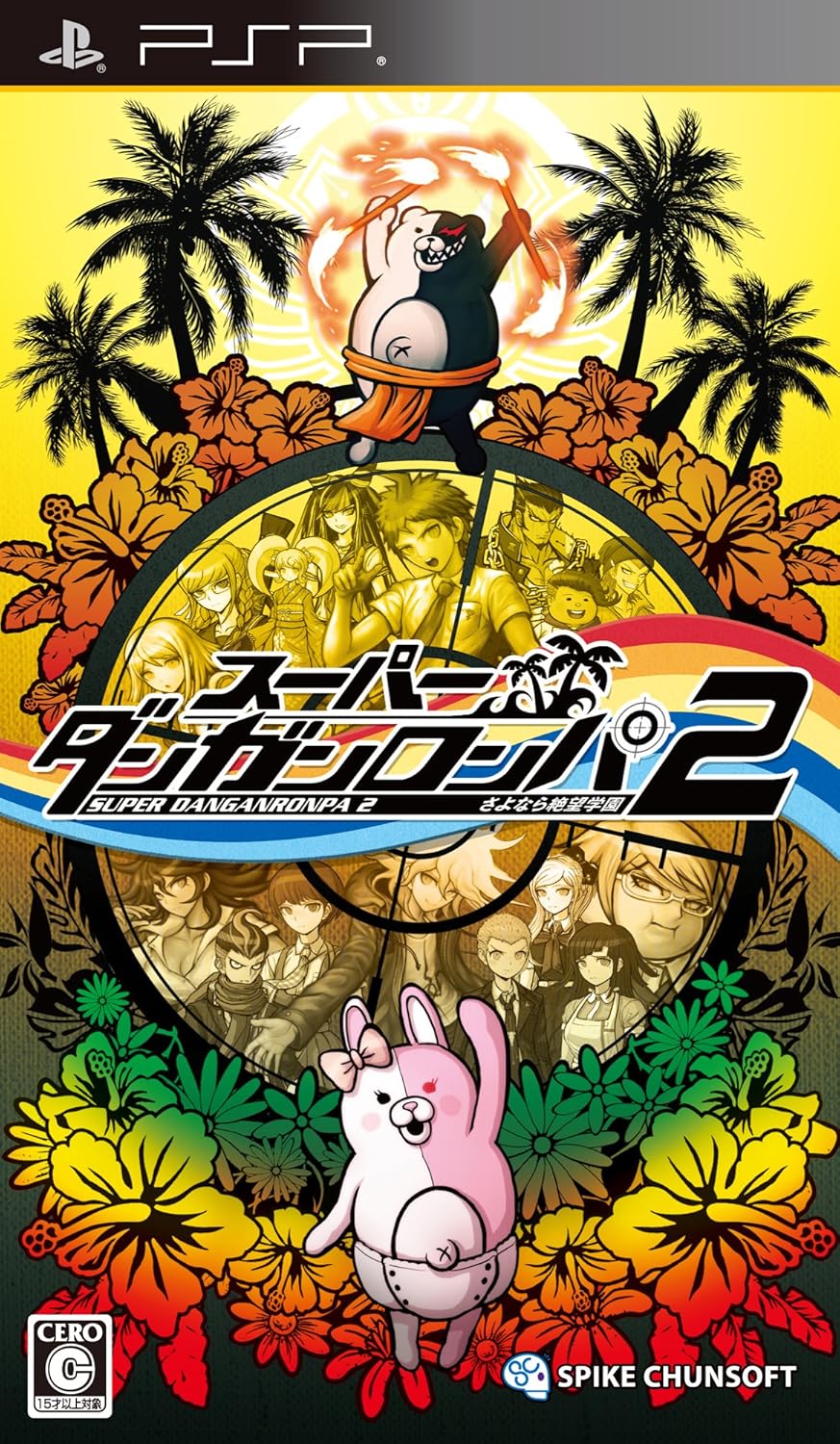 Danganronpa 2: Goodbye Despair is a visual novel adventure game developed by Spike Chunsoft. It is the second game in the Danganronpa franchise, following 2010's Danganronpa: Trigger Happy Havoc. It was first released in Japan for the PlayStation Portable in July 2012, with a port released for the PlayStation Vita in Japan in October 2013, and worldwide by NIS America in September 2014. A port for personal computers was also released in April 2016, as well as a bundle containing the first Danganronpa for the PlayStation 4 in March 2017, called Danganronpa 1-2 Reload.
The story follows a group of high school students who are trapped on a tropical island by their high school's headmaster Monokuma, a sentient stuffed bear, along with a relative of Monokuma's, Monomi, a sentient stuffed rabbit. Similar to the first game, students are told to kill one of their peers and not be caught in the subsequent investigation and trial in order to leave the island.
Danganronpa 2: Goodbye Despair is followed by the canon spin-off Danganronpa Another Episode: Ultra Despair Girls released on September 25, 2014, and the anime Danganronpa 3: The End of Hope's Peak High School which ran from July 11, 2016 to September 29, 2016 and consisted of three parts that wrapped up the storyline. A loose sequel to the series called Danganronpa V3: Killing Harmony was released on January 12, 2017 with similar gameplay, but a different storyline.
DOWNLOAD: MEGA (2.04 GB)
 Shin Megami Tensei If...[a] is a Japanese role-playing video game developed and published by Atlus in 1994 for the Super Famicom. It is a spin-off from the Shin Megami Tensei series, itself part of the larger Megami Tensei franchise. Since release, it has been ported to mobile devices, the PlayStation and Microsoft Windows, and re-released digitally through Nintendo's Virtual Console service. The story follows a student of Karukozaka High School after their school is sucked into the realm of demons by a vengeful student's demon summoning spell going wrong.
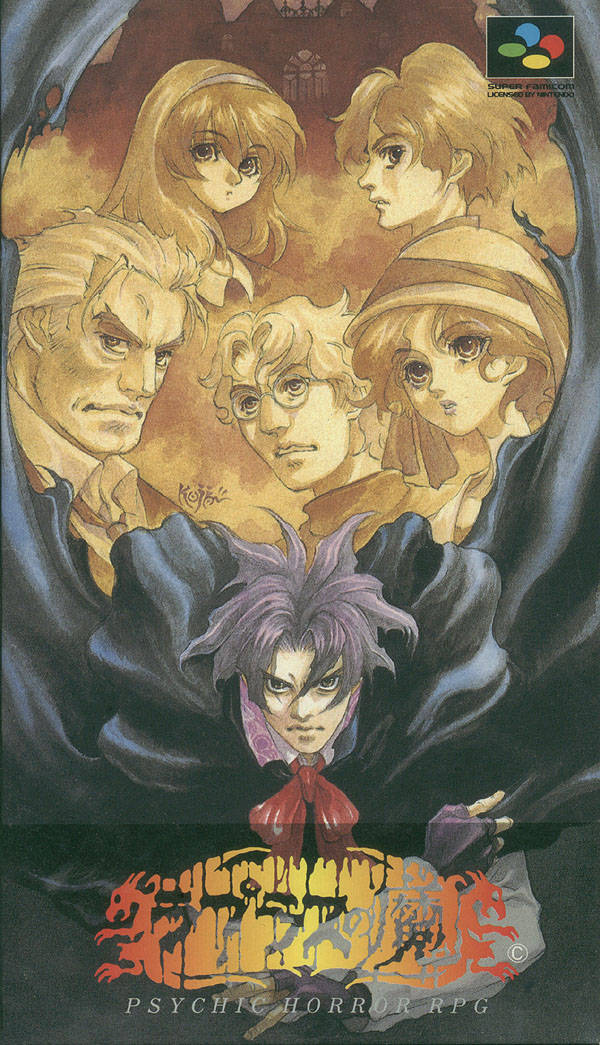 Laplace no Ma (ラプラスの魔, Rapurasu no Ma, literally "Laplace's Demon") is a Japanese video game released in 1987 for the NEC PC-8801 and NEC PC-9801.[1] The game was also ported to Sharp X68000, MSX, the SNES and TurboGrafx-CD.
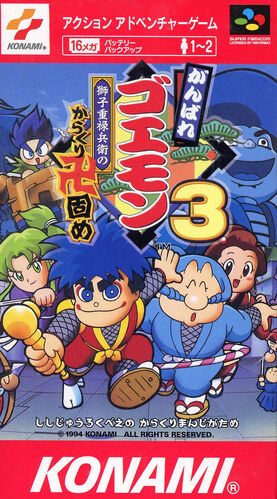 Ganbare Goemon 3: Shishijūrokubē no Karakuri Manji Gatame (がんばれゴエモン3~獅子重禄兵衛のからくり卍固め~?) is an action/adventure platformer video game developed and published by Konami, and originally released for the Super Famicom on December 16, 1994 in Japan. It is part of Konami's popular Ganbare Goemon series, and the third one of the franchise on that console.
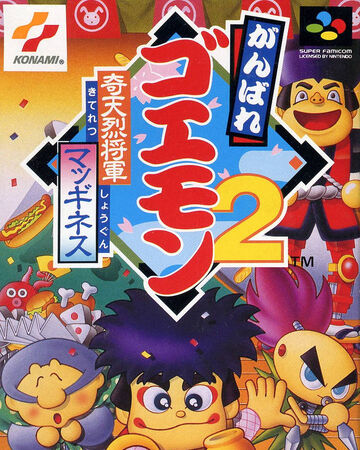 Ganbare Goemon 2: Kiteretsu Shōgun Magginesu (がんばれゴエモン2 奇天烈将軍マッギネス? lit. "Let's Go! Goemon 2: Very Strange General McGuiness") is a Super Famicom game by Konami released only in Japan, and the second of the SNES Ganbare Goemon games. This game was re-released along the first SNES Ganbare Goemon: Yuki-Hime Kyūshutsu Emaki (which was released outside Japan as The Legend of the Mystical Ninja) in a Game Boy Advance compilation, which also remained in Japan. This game marks the debut of Goemon's giant robot Impact and of the clockwork ninja Sasuke as a playable character (he previously debuted in Legend of the Mystical Ninja as a boss). The game has similarities to Super Mario World but it is shorter and arguably much more difficult.
![Torneko no Daibouken : Fushigi no Dungeon [Japan] - Super Nintendo ...](https://photos.wowroms.com/emulators-roms-logo/48/29942/420-420/Torneko+no+Daibouken+-+Fushigi+no+Dungeon+(Japan)+(Rev+1)-image.jpg) Torneko no Daibōken: Fushigi no Dungeon[a] is the first game in the Mystery Dungeon series. It features Torneko (or Taloon, as he is known in North America), the merchant from Dragon Warrior IV, and his adventures around the Mystery Dungeon in search of items.
Torneko no Daibōken: Fushigi no Dungeon[a] is the first game in the Mystery Dungeon series. It features Torneko (or Taloon, as he is known in North America), the merchant from Dragon Warrior IV, and his adventures around the Mystery Dungeon in search of items. Dragon Quest III: The Seeds of Salvation,[a] titled Dragon Warrior III when initially localized to North America, is a role-playing video game developed by Chunsoft and published by Enix. It is the third installment in the Dragon Quest series and was first released for the Family Computer (Famicom) in Japan and later for the Nintendo Entertainment System (NES) in North America. The game saw an enhanced remake for the Super Famicom (the Japanese release of the Super NES) in 1996 and the Game Boy Color in 2001, and a port to mobile phones and the Wii in 2009 and 2011. A version of the game for Android and iOS was released in Japan on September 25, 2014,[1] and worldwide as Dragon Quest III: The Seeds of Salvation on December 4, 2014. It was the first time the game was given an official English subtitle.
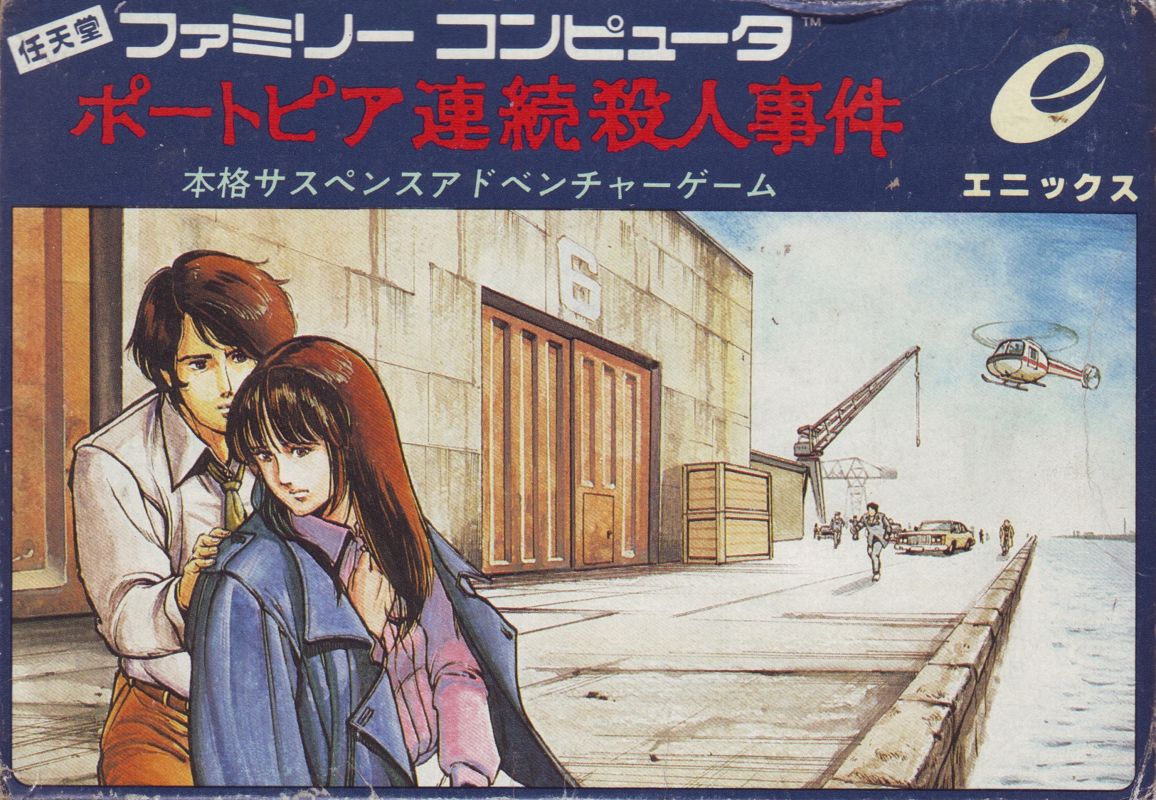 Portopia Renzoku Satsujin Jiken (Japanese: ポートピア連続殺人事件), often translated to The Portopia Serial Murder Case in English, is an adventure game designed by Yuji Horii and published by Enix. It was first released on the NEC PC-6001 in June 1983, and has since been ported to other personal computers, the Nintendo Famicom, and mobile phone services.